
 VI
VI LinkedIn
Consortia Group × Vizera: Building an AI Visualization Platform for Architects
What we built with Vizera and why it matters
Architectural ideas usually begin long before a building exists. Designers sketch concepts, collect references, and imagine how spaces might look and feel. Turning those early ideas into visuals that can be shared with clients or collaborators, however, often takes significant time.
Traditional rendering tools are powerful but demanding. Producing a high-quality perspective can take hours, and even small adjustments to materials, lighting, or style can require repeating large parts of the workflow. For architects exploring multiple design directions, this quickly becomes a bottleneck.
That is where Consortia Group’s collaboration with Vizera began. The goal was to make architectural visualization faster and easier to iterate using AI, not to replace the design process, but to support the early stage where architects experiment with ideas and visual directions.
Turning Image Generation Into a Practical Tool
AI image generation has become widely accessible, but turning it into a professional tool requires more than simply connecting to a model API. Architects rarely generate a single image and move on. In practice, they experiment with different visual styles, adjust details, compare alternatives, and revisit earlier concepts as the design evolves.
For that reason, we focused on building Vizera as a workspace rather than a simple image generator. The platform allows users to generate architectural visuals from prompts or reference images, refine those outputs using AI editing tools, and organize their work within structured projects so that images and iterations remain connected.
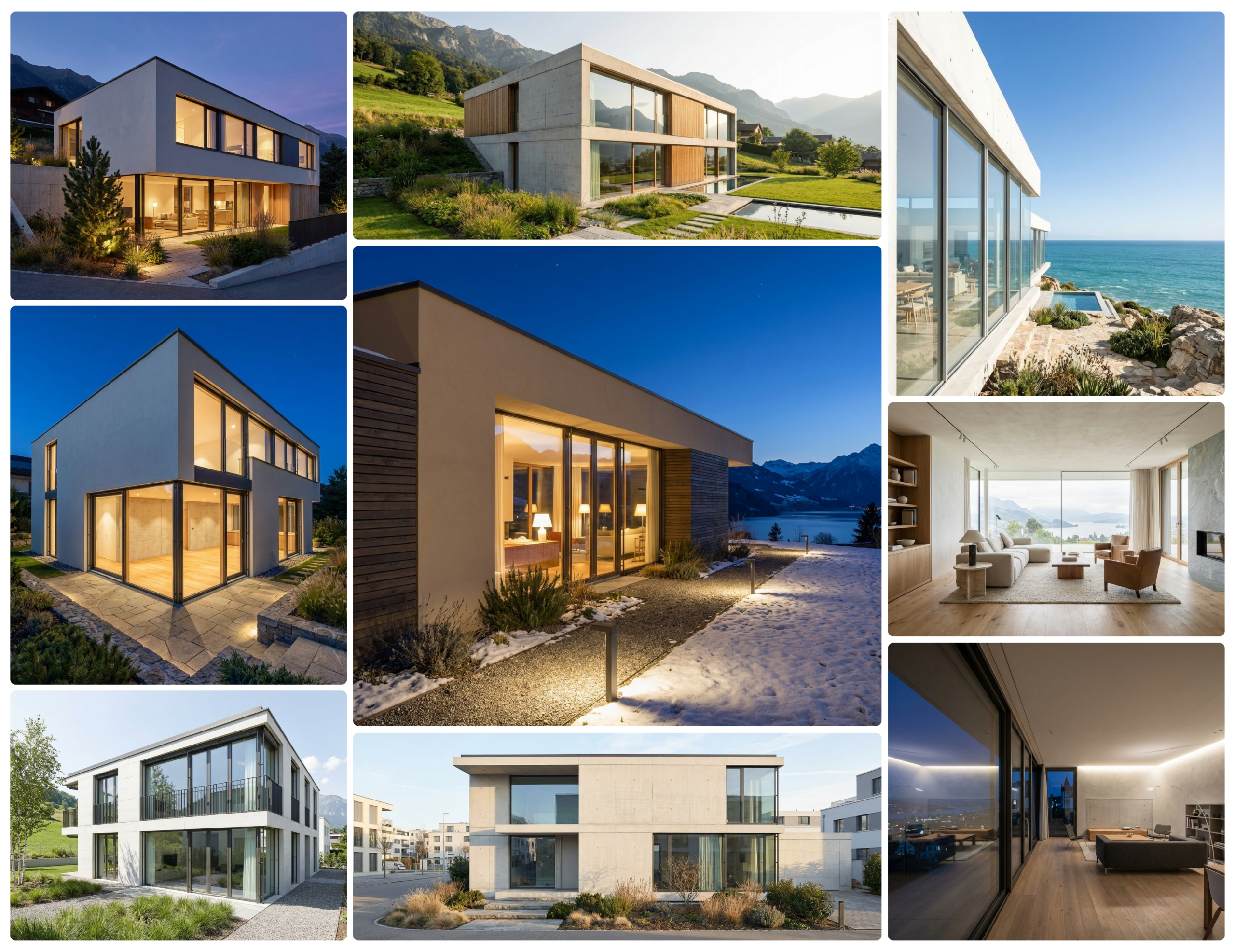
Architectural visualizations generated using Vizera’s AI platform.
Vizera integrates several generative models, including SeeDream 4, Flux Krea, Flux Kontext Pro, Flux Pro 2.0, Banana Nano, Imagen 4, Wan 2.2, Kling 2.5, and Google Veo. Different models produce different visual characteristics, which allows architects to experiment with multiple interpretations of the same concept and explore stylistic variations without rebuilding the entire scene.
Supporting Iteration in the Design Process
Architectural design is inherently iterative. Designers adjust proportions, materials, and atmosphere while refining an idea, and each variation often leads to new possibilities. Managing those variations can become complicated when images are scattered across different tools or exported into separate folders.
Vizera addresses this by keeping the entire process inside a single platform. Users can organize images into projects, track edits, revisit earlier versions, and save promising directions for further development. This structure makes experimentation easier because the context around each image is preserved instead of being lost between different steps in the workflow.
Building the System Behind the Platform
From a technical perspective, the platform needed to support frequent AI generation while maintaining a responsive user experience.
The Consortia engineering team built the platform using:
- ReactJS for the frontend
- NodeJS with NestJS for the backend
- BullMQ for background processing of generation tasks
This architecture allows image generation jobs to be queued and processed efficiently while users continue exploring and editing their work.
The system was designed to support hundreds of concurrent users, with cloud infrastructure handling image storage and processing as the platform scales.
Early Usage and Results
Since its launch, Vizera has begun attracting users interested in AI-assisted architectural visualization. The platform currently has:
- 1,218 registered users,
- 334 subscribed users
- 17,100+ generated images
What stands out is how the tool is being used. Architects tend to generate multiple variations of a concept and refine them through quick iterations, which reflects the exploratory nature of design work. Instead of waiting hours for a render before trying another direction, they can experiment with several ideas within minutes.
What This Project Shows About How We Build
Projects like Vizera demonstrate how AI can be integrated into professional workflows without replacing human expertise.
Architects still make the design decisions and determine which ideas are worth pursuing. The platform simply reduces the time required to visualize those ideas, allowing teams to explore more possibilities before committing to a final direction.
For Consortia, the goal was to combine generative AI, scalable web infrastructure, and a workflow aligned with how architects actually work, turning AI image generation into a practical tool for real design processes.